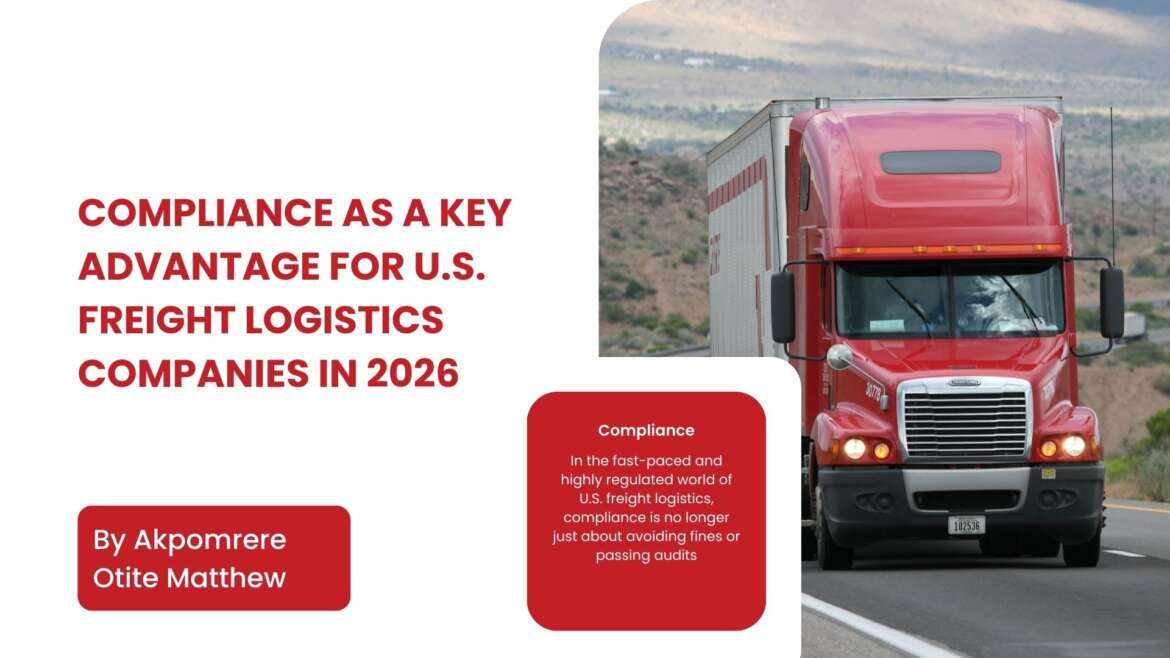
In the fast-paced and highly regulated world of U.S. freight logistics, compliance is no longer just about avoiding fines or passing audits. In 2026, regulatory compliance has become a core business differentiator—one that directly impacts operational efficiency, customer trust, scalability, and long-term profitability.
With heightened enforcement from federal agencies, increased shipper scrutiny, and rising expectations around safety, data security, and sustainability, compliance now serves as a strategic advantage for freight carriers, brokers, and logistics providers operating across domestic and cross-border supply chains.
This article explores how compliance within the U.S. regulatory framework has evolved into a powerful asset for freight logistics companies in 2026—and how industry leaders are leveraging it to stay ahead.
Understanding Compliance in U.S. Freight Logistics
Compliance in the U.S. freight logistics industry involves strict adherence to a complex network of federal, state, and industry regulations governing how goods are transported, vehicles are maintained, drivers are managed, and data is handled.
Key Compliance Areas Include:
- Federal Motor Carrier Safety Administration (FMCSA) regulations
- Federal Motor Vehicle Safety Standards (FMVSS)
- U.S. Department of Transportation (DOT) requirements
- Environmental Protection Agency (EPA) emissions standards
- Customs and Border Protection (CBP) trade regulations
- Data security and recordkeeping mandates
- Industry certifications and safety programs
In 2026, compliance is deeply integrated into fleet operations, dispatch, human resources, and technology systems—making it a company-wide responsibility, not a standalone function.
Core U.S. Regulatory Pillars Affecting Freight Companies
FMCSA and DOT Compliance
The FMCSA remains the primary authority overseeing commercial motor vehicle operations in the U.S. Key compliance areas include:
- Hours of Service (HOS) rules and Electronic Logging Devices (ELDs)
- Driver Qualification Files (DQFs)
- Drug and Alcohol Clearinghouse requirements
- Vehicle inspection, repair, and maintenance records
- Safety Measurement System (SMS) and CSA scores
- Accident reporting and compliance reviews
In 2026, carriers with strong FMCSA compliance records benefit from better safety scores, fewer roadside inspections, lower insurance premiums, and greater shipper confidence.
FMVSS and Equipment Compliance
The FMVSS regulate the design, construction, and performance of commercial vehicles and equipment. Compliance ensures that:
- Trucks and trailers meet federal safety manufacturing standards
- Brake systems, lighting, tires, and underride guards perform properly
- Equipment modifications remain within legal limits
Failure to comply can result in out-of-service orders, liability exposure, and reputational damage.
Environmental and Emissions Compliance (EPA & CARB)
Environmental compliance is increasingly critical in 2026. Freight companies must align with:
- EPA emissions standards
- Fuel efficiency and greenhouse gas reporting
- State-level regulations such as California Air Resources Board (CARB)
Carriers that proactively invest in cleaner fleets, alternative fuels, and emissions monitoring not only remain compliant but also gain access to sustainability-focused shippers and government incentives.
Why Compliance Matters More Than Ever in 2026
1. Stronger Reputation and Shipper Trust
Shippers and brokers now evaluate a carrier’s compliance history before awarding freight. Clean FMCSA records, strong safety scores, and transparent processes signal professionalism and reliability.
Compliance-driven companies benefit from:
- Long-term shipper contracts
- Preferred carrier status
- Faster onboarding
- Higher freight volumes
Trust built through compliance becomes a lasting competitive moat.
2. Risk Reduction and Cost Control
Non-compliance in the U.S. freight industry can lead to:
- Civil penalties and fines
- Out-of-service orders
- Loss of operating authority
- Increased insurance premiums
- Legal exposure after accidents
A structured compliance program helps identify risks early, correct deficiencies, and prevent costly disruptions—protecting both revenue and brand reputation.
3. Operational Efficiency and Scalability
Contrary to common belief, compliance improves efficiency. In 2026, leading logistics companies use compliance data to optimize operations.
Key benefits include:
- Fewer roadside violations and delays
- Faster audits and inspections
- Reduced paperwork through automation
- Improved fleet uptime and planning
Compliance becomes the foundation for scalable, predictable growth.
4. Competitive Advantage in a Tight Freight Market
As regulations tighten and capacity fluctuates, compliance separates professional operators from high-risk carriers. Many brokers and enterprise shippers refuse to work with non-compliant providers.
A strong compliance profile enables companies to:
- Win higher-value freight
- Enter regulated verticals (pharma, hazmat, food)
- Compete with larger fleets
- Survive market downturns
In 2026, compliance is often the deciding factor in freight award decisions.
5. Sustainability, ESG, and Corporate Responsibility
Environmental, Social, and Governance (ESG) expectations continue to reshape U.S. logistics. Compliance with labor, safety, and environmental regulations demonstrates responsible corporate leadership.
Aligned compliance and ESG strategies help companies:
- Reduce emissions and fuel waste
- Improve driver safety and retention
- Strengthen investor and shipper confidence
- Future-proof operations against new regulations
The Role of Technology in U.S. Freight Compliance
Technology is the backbone of modern compliance in 2026. Leading freight companies rely on:
- AI-driven compliance monitoring for HOS, maintenance, and safety risks
- ELD and telematics systems for real-time data capture
- Blockchain-based documentation for secure, auditable records
- IoT sensors for vehicle health, cargo condition, and emissions tracking
- Cloud-based compliance platforms for centralized audits and reporting
These tools enable a shift from reactive compliance to predictive compliance.
How Freight Companies Can Turn Compliance into a Business Advantage
To maximize compliance as a strategic asset, U.S. freight companies should:
- Integrate compliance into executive-level strategy
- Invest in automation and compliance-focused technology
- Provide continuous training for drivers, dispatchers, and managers
- Monitor FMCSA scores and audit readiness year-round
- Partner with compliance experts for complex regulatory environments
Conclusion: Compliance as a Growth Engine in 2026
In the U.S. freight logistics industry, compliance is no longer optional, secondary, or reactive. In 2026, it is a growth engine, trust signal, and competitive advantage.
Companies that embed FMCSA, FMVSS, DOT, and EPA compliance into their business strategy gain stronger reputations, lower risk exposure, smoother operations, and greater access to premium freight opportunities.
As regulations continue to evolve, the freight companies that thrive will be those that treat compliance not as a burden—but as a strategic investment in long-term success.
Leave a reply