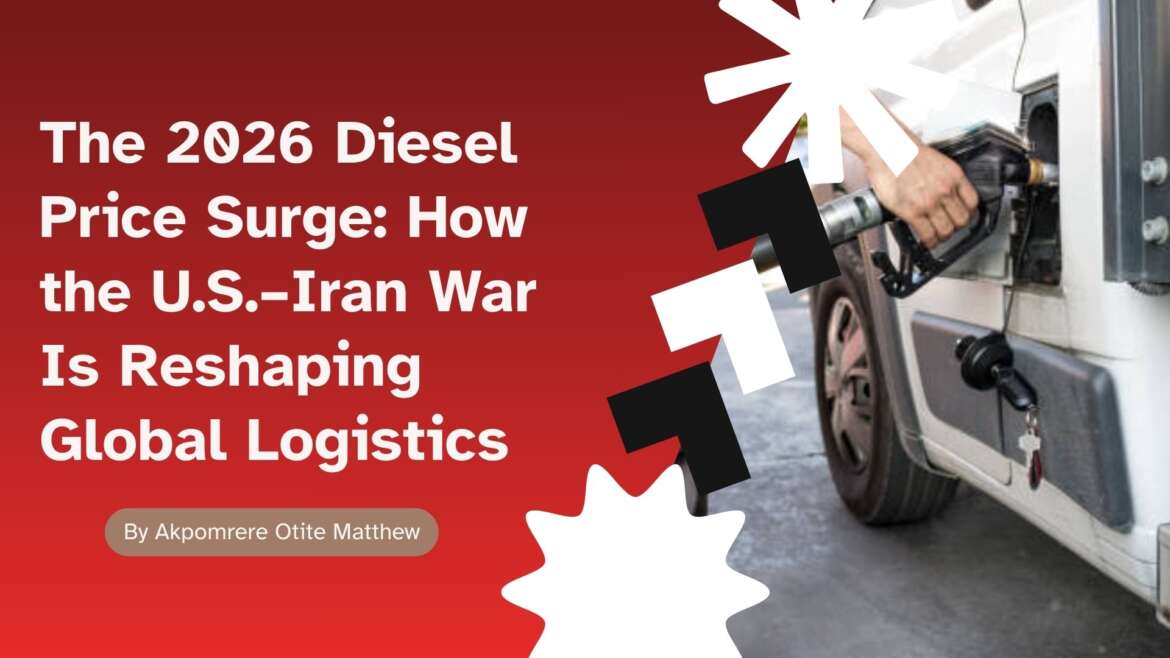
The global logistics industry in 2026 is facing one of its most significant cost shocks in recent years. The ongoing conflict between the United States and Iran has triggered major disruptions in global energy markets, causing oil and diesel prices to surge dramatically.
Because diesel powers most freight trucks, cargo ships, and heavy transport vehicles, any disruption in oil supply immediately affects logistics operations worldwide. From freight dispatch companies to trucking fleets and supply chain operators, the rising cost of diesel has become one of the biggest operational challenges of 2026.
This article explores how the current U.S.–Iran conflict is driving diesel price spikes and what logistics companies must do to remain profitable in this volatile environment.
How the U.S.–Iran Conflict Triggered the 2026 Diesel Price Spike
The conflict escalated in late February 2026 after military strikes and retaliatory attacks in the Middle East, particularly around the Persian Gulf. One of the most critical consequences has been disruption in the Strait of Hormuz, a narrow maritime passage that carries about 20% of the world’s oil supply.
When Iran threatened and effectively restricted shipping through the strait, tanker traffic dropped dramatically and hundreds of ships were forced to anchor outside the region due to security risks.
This created an immediate shock in global energy markets:
- Oil prices surged past $100 per barrel for the first time in years.
- Global fuel prices rose sharply within weeks.
Energy analysts describe the disruption as one of the largest supply shocks since the 1970s global energy crisis.
For the logistics sector, the impact has been immediate and widespread.
Implications of the 2026 Diesel Price Spike for the Logistics Industry
1. Rising Transportation Costs
Diesel is the primary fuel used by heavy-duty trucks that move goods across countries and continents. As crude oil prices rise, diesel prices follow closely.
In early 2026, diesel prices increased sharply alongside crude oil, with fuel costs jumping significantly within a short period.
For logistics companies, this means:
- Higher operating costs per mile
- Reduced profit margins on freight contracts
- Increased need for fuel surcharges
Freight dispatchers now have to calculate loads more carefully to ensure each trip remains profitable.
2. Supply Chain Disruptions
The Middle East conflict has disrupted several critical energy and shipping routes.
Iranian retaliation included attacks on vessels and threats against shipping infrastructure, forcing many shipping companies to suspend operations in parts of the Gulf.
The result includes:
- Delayed cargo shipments
- Increased insurance costs for shipping routes
- Longer transportation routes to avoid conflict zones
All of these factors increase fuel consumption and operational costs across the global logistics industry.
3. Inflation and Rising Goods Prices
Higher fuel costs affect more than transportation companies. They also increase the cost of goods across the entire economy.
When diesel prices increase:
- Shipping costs rise
- Retail prices increase
- Food and consumer goods become more expensive
Economists warn that prolonged energy disruption from the Iran conflict could push global inflation higher and slow economic growth.
4. Global Market Volatility
Fuel markets have become extremely volatile due to the geopolitical tensions.
Oil prices have swung rapidly based on military developments and political signals about the war’s duration.
For example, crude oil briefly surged above $120 per barrel during the conflict before dropping again as markets reacted to new political developments.
Such volatility makes budgeting and financial planning extremely difficult for logistics operators.
Strategies Logistics Companies Must Use to Stay Profitable
1. Implement Fuel Surcharge Systems
Freight companies must adopt dynamic fuel surcharge models that adjust rates based on diesel price fluctuations.
Fuel surcharges help logistics companies:
- Protect profit margins
- Share rising costs with customers
- Maintain operational stability
Without proper surcharge structures, many dispatch operations risk running at a loss during diesel spikes.
2. Optimize Routes and Reduce Empty Miles
With fuel prices rising, route efficiency has become more important than ever.
Dispatchers should use logistics software and GPS data to:
- Avoid congestion and delays
- Reduce unnecessary mileage
- Improve delivery scheduling
Reducing empty truck miles alone can significantly lower fuel consumption.
3. Expand Trailer Leasing and Equipment Sharing
Many logistics companies are shifting toward trailer leasing models to reduce capital expenses.
Trailer leasing allows operators to:
- Scale capacity based on demand
- Reduce maintenance costs
- Improve fleet flexibility during market uncertainty
This approach is becoming increasingly popular in volatile logistics markets.
4. Diversify Transportation Modes
Companies relying solely on trucking face higher exposure to diesel price spikes.
To reduce risk, many logistics providers are adopting intermodal transportation, combining:
- Rail transport
- Maritime shipping
- Truck delivery
Rail and sea freight often consume less fuel per ton-mile than trucking, making them attractive alternatives during fuel crises.
5. Invest in Logistics Technology
Technology helps logistics companies reduce operational inefficiencies that increase fuel consumption.
Important tools include:
- Fleet tracking systems
- Freight management software
- Data analytics platforms
- Automated dispatch tools
These technologies allow companies to monitor fuel usage and make data-driven decisions.
6. Strengthen Supplier and Carrier Partnerships
Strong relationships with fuel suppliers, carriers, and logistics partners can help companies secure better pricing and maintain operational continuity during disruptions.
Strategic partnerships often provide:
- Stable contract rates
- Priority access to equipment
- More reliable freight capacity
Conclusion
The 2026 U.S.–Iran conflict has demonstrated how geopolitical tensions can instantly disrupt global energy markets and logistics operations.
With oil prices exceeding $100 per barrel and supply routes under threat, transportation companies must prepare for continued volatility in fuel markets.
However, logistics companies that adapt through technology, efficient dispatch strategies, diversified transportation models, and strong partnerships will be better positioned to survive—and even thrive—in this uncertain environment.
In the modern logistics industry, resilience, adaptability, and strategic planning are no longer optional—they are essential for survival.
Leave a reply