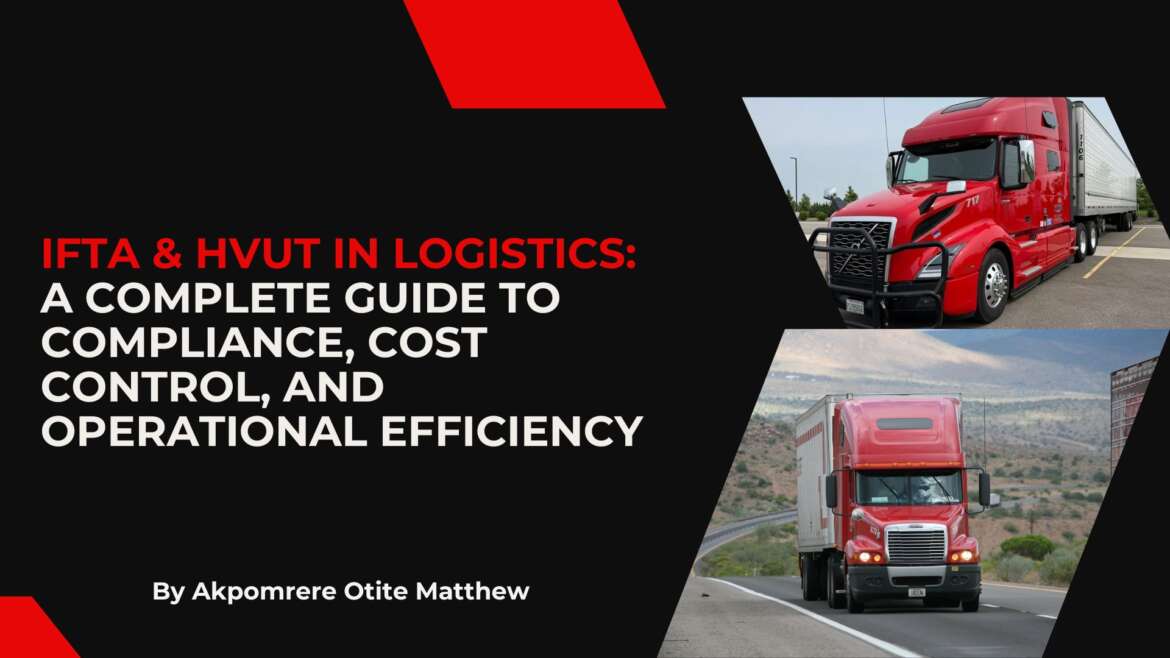
In the modern logistics landscape, regulatory compliance is not just a requirement—it is a strategic advantage. Two critical tax frameworks that every interstate carrier must understand are the International Fuel Tax Agreement (IFTA) and the Heavy Vehicle Use Tax (HVUT). These systems directly impact cost management, operational efficiency, and long-term sustainability in freight operations.
This guide provides a structured, publication-ready breakdown of IFTA and HVUT, along with actionable insights for logistics companies, dispatchers, and fleet managers.
1. Understanding IFTA (International Fuel Tax Agreement)
What is IFTA?
The International Fuel Tax Agreement (IFTA) is a cooperative agreement among 48 U.S. states and 10 Canadian provinces designed to simplify fuel tax reporting for motor carriers operating across multiple jurisdictions.
Instead of filing separate fuel tax reports in each state or province, carriers submit a single quarterly return through their base jurisdiction.
Key Requirements
IFTA License & Decals
Carriers must register in their base state and display IFTA decals on qualified vehicles.
Quarterly Filing
Reports must include:
- Total miles traveled (by jurisdiction)
- Fuel purchased (by jurisdiction)
- Taxable vs. non-taxable miles
Record Keeping
Maintain detailed trip logs, fuel receipts, and mileage data for audit purposes (typically up to four years).
Benefits of IFTA
- Simplified Compliance – One report replaces multiple state filings
- Fair Tax Distribution – Taxes are allocated based on actual road usage
- Reduced Administrative Burden – Streamlined reporting saves time and resources
Common Challenges
- Inaccurate mileage tracking
- Missing fuel receipts
- Late or incorrect filings leading to penalties
- Poor audit preparedness
2. Understanding HVUT (Heavy Vehicle Use Tax)
What is HVUT?
The Heavy Vehicle Use Tax (HVUT) is imposed by the Internal Revenue Service (IRS) on vehicles operating on public highways with a gross weight of 55,000 pounds or more.
This annual tax contributes to the Highway Trust Fund, which finances road construction and maintenance.
Key Requirements
Form 2290 Filing
Filed annually with the IRS.
Deadline
Typically due August 31 each year for vehicles in service during July.
Tax Range
$100 to $550 depending on vehicle weight.
Proof of Payment
Required for:
- Vehicle registration
- Plate renewal
Benefits of HVUT
- Supports national infrastructure development
- Ensures equitable contribution from heavy vehicle operators
- Enables smoother highway operations for logistics companies
Common Challenges
- Missed deadlines resulting in penalties
- Incorrect vehicle weight classification
- Delays in obtaining stamped Schedule 1 (proof of payment)
3. Strategic Importance for Logistics Companies
✅ Cost Management & Profitability
Proper IFTA reporting helps identify fuel inefficiencies across routes, while HVUT allows for predictable annual budgeting. Together, they enable:
- Accurate cost forecasting
- Reduced fuel waste
- Improved profit margins
✅ Regulatory Compliance & Risk Mitigation
Non-compliance can lead to:
- Heavy fines and penalties
- Suspension of operating authority
- Increased audit exposure
Maintaining accurate records and timely filings protects both reputation and revenue.
✅ Operational Efficiency
- Route optimization using IFTA data
- Better fuel purchasing strategies
- Streamlined fleet performance monitoring
✅ Cross-Border and Interstate Operations
For carriers operating across the U.S. and Canada:
- IFTA simplifies multi-jurisdiction tax reporting
- HVUT ensures eligibility for vehicle registration and legal operation
4. Best Practices for IFTA & HVUT Compliance
✔ Implement Technology
- Use ELDs (Electronic Logging Devices) for accurate mileage tracking
- Adopt fleet management or TMS software for automated reporting
✔ Maintain Accurate Records
- Keep fuel receipts and trip logs organized
- Reconcile mileage and fuel data regularly
✔ Set Compliance Calendars
- Quarterly reminders for IFTA filings
- Annual alerts for HVUT deadlines
✔ Conduct Internal Audits
- Review reports before submission
- Identify discrepancies early
✔ Work with Compliance Experts
- Outsource filings if necessary
- Stay updated on regulatory changes
The Future of Fuel Tax Compliance in Logistics
As the logistics industry evolves, digital transformation is reshaping compliance through:
- AI-powered route optimization
- Automated tax reporting systems
- Real-time fuel tracking and analytics
Companies that embrace these tools gain a competitive edge through efficiency, transparency, and reduced compliance risks.
Conclusion
IFTA and HVUT are more than regulatory obligations—they are essential pillars of efficient logistics operations. When properly managed, they provide valuable insights into fuel consumption, operational performance, and cost control.
For logistics companies aiming to scale sustainably, mastering these tax systems is not optional—it is a necessity.
By prioritizing compliance, leveraging technology, and adopting best practices, carriers can transform regulatory requirements into strategic advantages.
Leave a reply