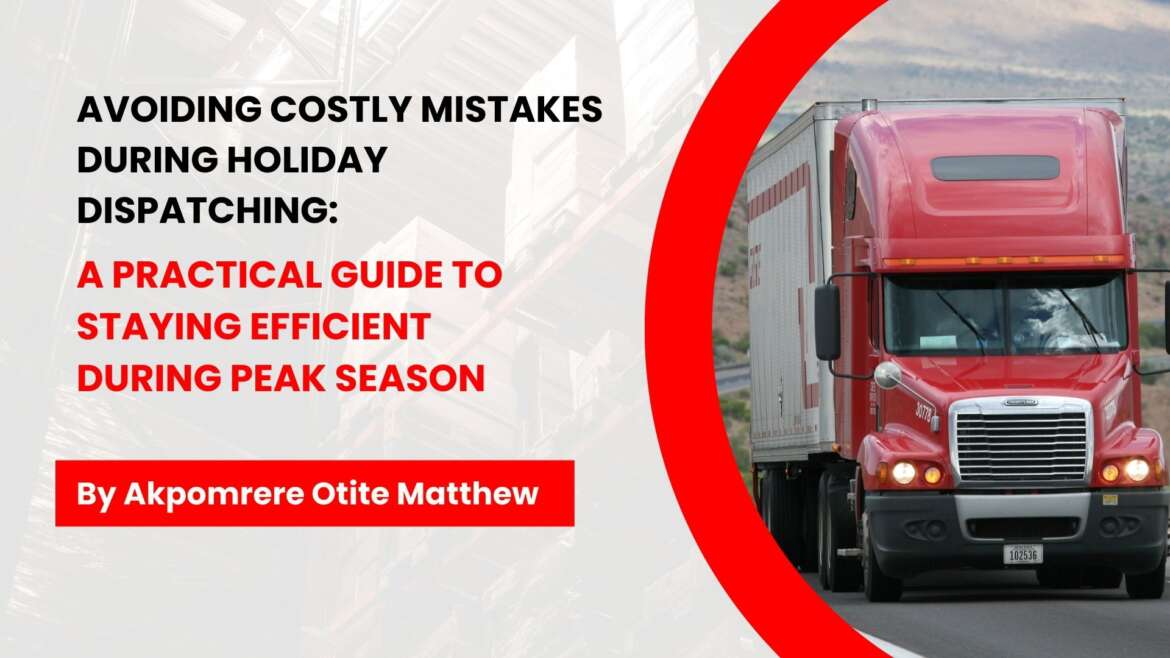
A Practical Guide to Staying Efficient During Peak Season
The holiday season is one of the most profitable—and most challenging—periods for businesses involved in logistics, retail, and freight operations. Order volumes surge, customer expectations rise, and even minor operational errors can quickly escalate into costly disruptions. Delivery delays, inventory inaccuracies, and poor communication can damage customer trust and strain operational resources.
To navigate this high-pressure season successfully, businesses must adopt a structured, proactive approach to holiday dispatching. This guide outlines proven strategies to help you avoid costly mistakes, maintain efficiency, and deliver a seamless customer experience during peak periods.
1. Proactive Planning: The Foundation of Holiday Success
Effective holiday dispatching begins long before the first seasonal order is placed. Planning ahead allows businesses to anticipate challenges and allocate resources efficiently.
Key planning actions include:
- Analyzing historical data to identify peak order days, high-demand products, and recurring bottlenecks.
- Forecasting demand accurately to ensure adequate staffing, vehicle availability, and warehouse capacity.
- Developing flexible dispatch schedules that can adapt to sudden demand spikes or disruptions.
- Engaging suppliers early to secure inventory and reduce the risk of stock shortages or late replenishments.
Early preparation minimizes last-minute decisions, which are often the root cause of costly dispatch errors.
2. Streamlining Order Management Processes
Disorganized order management is one of the most common causes of holiday dispatch failures. A streamlined system ensures that orders move smoothly from placement to delivery.
Best practices for efficient order management include:
- Automating order processing to reduce manual errors and speed up dispatch.
- Synchronizing inventory systems in real time to prevent overselling or stock discrepancies.
- Using barcode scanning or RFID technology to improve picking and packing accuracy.
- Implementing a centralized dashboard that provides real-time visibility into order status, exceptions, and delivery progress.
When order management is clear and automated, dispatch teams can focus on execution rather than firefighting.
3. Leveraging Technology for Smarter Dispatching
Technology plays a critical role in managing the complexity of holiday logistics. Investing in the right systems can significantly improve efficiency and cost control.
Essential technology tools include:
- Transportation Management Systems (TMS): route planning, carrier selection, and shipment tracking.
- Route optimization software: reduced travel time, fuel costs, and delivery delays.
- Scalable IT infrastructure: capable of handling increased online traffic and transaction volumes.
- Customer Relationship Management (CRM) systems: proactive delivery updates and expectation management.
The right technology transforms dispatching from a reactive function into a strategic advantage.
4. Strengthening Communication Across Teams and Customers
Clear, consistent communication becomes even more critical during peak seasons. Miscommunication can lead to missed pickups, delayed deliveries, and frustrated customers.
To enhance communication:
- Establish clear internal communication channels for dispatchers, drivers, warehouse staff, and customer service teams.
- Define priorities and escalation procedures so issues are resolved quickly.
- Keep customer service teams fully informed so they can handle inquiries confidently.
- Use automated SMS and email notifications to provide customers with real-time shipment updates.
Transparent communication builds trust internally and externally—even when challenges arise.
5. Training and Empowering Your Workforce
People remain at the heart of every successful dispatch operation. During the holiday rush, a well-trained and empowered team can make the difference between success and chaos.
Key workforce strategies include:
- Conducting refresher training on dispatch systems, tools, and procedures.
- Running simulations for potential disruptions such as severe weather, system outages, or vehicle breakdowns.
- Encouraging feedback from frontline staff to identify inefficiencies.
- Empowering team members to make time-sensitive decisions without unnecessary approvals.
A confident, prepared team responds faster and makes fewer costly mistakes.
6. Monitoring Performance in Real Time
Holiday dispatching leaves little room for delayed responses. Real-time performance monitoring allows issues to be detected and corrected before they escalate.
Focus on tracking:
- Key Performance Indicators (KPIs) such as on-time delivery rates, order accuracy, and customer complaints.
- Live dashboards showing shipment status, driver performance, and warehouse throughput.
- Automated alerts that flag delays, missed milestones, or system anomalies.
Real-time visibility enables quick intervention and continuous control during peak operations.
7. Building Strong Contingency and Backup Plans
No matter how well you plan, disruptions are inevitable during the holiday season. What matters is how prepared you are to respond.
Effective contingency planning should include:
- Backup courier partners or carriers for overflow or emergency support.
- Alternative routes and delivery windows to manage traffic congestion.
- Safety stock for high-demand products to cushion supply chain shocks.
- Clear emergency response roles so everyone knows what to do when plans change.
Preparedness reduces downtime and protects service levels when the unexpected occurs.
8. Post-Holiday Review and Continuous Improvement
Once the holiday rush subsides, the learning begins. A structured review helps turn seasonal challenges into long-term improvements.
Post-holiday actions should include:
- Reviewing performance data and comparing results against targets.
- Gathering feedback from dispatchers, drivers, warehouse staff, and customers.
- Identifying root causes of delays, errors, or cost overruns.
- Documenting lessons learned and updating holiday dispatch playbooks.
- Recognizing team achievements to reinforce positive performance.
Continuous improvement ensures that each holiday season is smoother than the last.
Conclusion
Holiday dispatching is a complex balancing act that demands foresight, structure, and adaptability. By planning early, investing in technology, strengthening communication, empowering teams, and preparing for disruptions, businesses can avoid costly mistakes and deliver consistent service—even during peak demand.
With a disciplined approach and a culture of continuous improvement, holiday dispatching can shift from a seasonal risk to a competitive advantage, driving customer satisfaction and long-term operational success.
Leave a reply