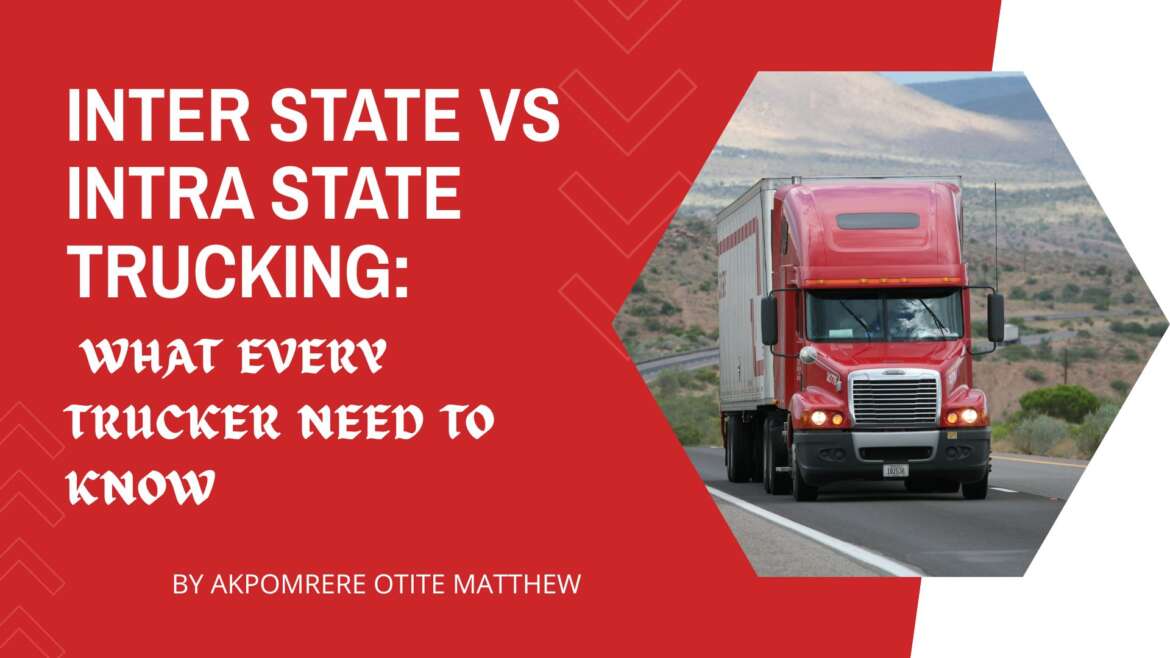
The U.S. trucking industry is the backbone of national commerce, moving freight, consumer goods, industrial materials, and essential supplies across cities and states every day. Whether you’re an owner-operator, fleet owner, freight dispatcher, or new CDL driver, understanding the difference between interstate trucking and intrastate trucking is critical for regulatory compliance, insurance coverage, licensing, and long-term operational success.
This comprehensive guide explains the key differences, federal and state regulations, CDL requirements, operating authority, DOT compliance, and insurance standards every trucker must know.
What Is Interstate Trucking?
Interstate trucking refers to the transportation of freight across state lines or international borders. Even if a load begins and ends within the same state, it may still be considered interstate commerce if the freight is part of a shipment that crosses state boundaries.
Interstate motor carriers are regulated by the Federal Motor Carrier Safety Administration (FMCSA), which enforces federal trucking laws to ensure highway safety and operational compliance.
Key Requirements for Interstate Trucking
1. Federal DOT Regulations
Interstate carriers must comply with Federal Motor Carrier Safety Regulations (FMCSRs), including:
- Hours of Service (HOS) rules
- Electronic Logging Device (ELD) mandate
- Driver Qualification Files (DQF)
- Drug and alcohol testing programs
- Vehicle inspection and maintenance standards
Carriers must also obtain and maintain a USDOT Number for tracking safety records and compliance audits.
2. CDL Requirements for Interstate Drivers
Drivers operating commercial motor vehicles (CMVs) across state lines must hold a valid Commercial Driver’s License (CDL) appropriate for the vehicle class (Class A, B, or C).
Additional endorsements may be required for:
- Hazardous materials (Hazmat)
- Tanker vehicles
- Double/triple trailers
- Passenger transport
Interstate CDL holders must also meet federal medical certification standards.
3. Operating Authority (MC Number)
Most interstate for-hire carriers must obtain:
- Motor Carrier (MC) Number
- Unified Carrier Registration (UCR)
- BOC-3 Process Agent filing
Operating without proper authority can lead to severe FMCSA penalties and out-of-service orders.
4. Insurance Requirements
Federal law requires higher minimum liability insurance limits for interstate carriers. Coverage typically includes:
- Primary liability insurance
- Cargo insurance
- Physical damage coverage
- General liability (optional but recommended)
Insurance requirements vary depending on freight type. For example, hazardous materials require significantly higher coverage limits.
5. Federal Safety Compliance & Audits
Interstate carriers are subject to:
- New Entrant Safety Audits
- Compliance Reviews
- CSA (Compliance, Safety, Accountability) scoring
Non-compliance can result in fines, revoked authority, or shutdown orders.
What Is Intrastate Trucking?
Intrastate trucking involves transporting goods entirely within one state’s borders. These operations are regulated primarily by that state’s Department of Transportation (DOT) or Public Utilities Commission.
Although intrastate trucking does not cross state lines, it must still comply with state-specific commercial vehicle laws and safety regulations.
Key Requirements for Intrastate Trucking
1. State-Specific Regulations
Each state establishes its own rules regarding:
- Vehicle weight limits
- Intrastate operating authority
- Fuel permits
- Oversize/overweight permits
- Safety compliance requirements
Some states adopt federal FMCSA standards, while others modify them for intrastate carriers.
2. CDL & Licensing Requirements
Intrastate drivers typically must hold a CDL if operating a commercial motor vehicle above the state’s weight threshold.
However:
- Some states allow restricted CDLs
- Medical requirements may differ
- Age requirements for intrastate drivers may be lower than interstate requirements
Always verify your state’s CDL regulations before operating.
3. Intrastate Operating Authority
Intrastate carriers usually do not need a federal MC Number but may need:
- A State DOT number
- An intrastate motor carrier permit
- State fuel tax registration
Failure to register properly can result in penalties or suspended operations.
4. Insurance Requirements
Intrastate insurance minimums are set by individual states and are often lower than federal interstate requirements. However, coverage must still meet state-mandated liability limits.
5. State Safety Compliance
Intrastate carriers may still undergo:
- State safety inspections
- Random roadside inspections
- Compliance audits
Regulations vary, so understanding your state’s commercial trucking laws is essential.
Interstate vs. Intrastate Trucking: Side-by-Side Comparison
| Feature | Interstate Trucking | Intrastate Trucking |
|---|---|---|
| Regulatory Authority | Federal (FMCSA) | State DOT or Regulatory Agency |
| USDOT Number | Required | Often Required (State-dependent) |
| MC Number | Required (for-hire carriers) | Usually Not Required |
| Insurance Minimums | Higher federal limits | State-determined limits |
| Safety Regulations | Federal Motor Carrier Safety Regulations | State-specific or adopted federal rules |
| CDL Requirements | Federal standards apply | State standards apply |
Why Understanding the Difference Matters
For truck drivers, owner-operators, and fleet managers, knowing whether your operation is interstate or intrastate affects:
- DOT compliance requirements
- Insurance premiums
- CDL qualifications
- Drug and alcohol testing programs
- ELD requirements
- Audit exposure
- Operating costs
Misclassification can result in hefty fines, revoked operating authority, and costly compliance violations.
Pro Tips for Truckers & Motor Carriers
Stay Updated on FMCSA and State Regulations
Regulations frequently change. Monitor federal and state transportation updates to remain compliant.
Maintain Accurate Documentation
Keep your CDL, medical certificate, insurance certificates, permits, and log records current and organized.
Verify Load Classification
Even if operating within one state, confirm whether your freight qualifies as interstate commerce.
Work With Compliance Experts
Partnering with a compliance consultant, insurance broker, or trucking attorney can help protect your authority and business.
Final Thoughts: Compliance Is Key to Long-Term Success
Whether you operate as an interstate motor carrier under federal FMCSA regulations or run an intrastate trucking company governed by state law, compliance is not optional — it is essential.
Understanding the regulatory differences between interstate and intrastate trucking helps protect your CDL, your operating authority, and your trucking business.
In today’s competitive freight industry, staying compliant isn’t just about avoiding fines — it’s about building a sustainable, profitable, and legally sound trucking operation.
If you’re running loads as an interstate or intrastate carrier, understanding rate confirmations is essential for protecting your revenue and avoiding costly disputes.
Watch here:
https://youtu.be/1XDQTguoq_Q?si=HzyjC5I28FRLPYT3
Stay informed. Stay compliant. Secure the right rates.
Leave a reply