Introduction
The global logistics industry is evolving rapidly. Rising international trade, booming e-commerce, and advancements in technology are transforming how goods move across borders and markets.
One sector experiencing remarkable growth within this transformation is trailer leasing.
Instead of purchasing expensive transportation equipment, many logistics companies now prefer leasing trailers. This approach provides flexibility, reduces capital costs, and allows businesses to quickly adapt to fluctuating market demands.
In this article, we explore:
- The growing global trailer leasing market
- Key factors driving its expansion
- How businesses generate profit through leasing
- The challenges and future opportunities within the industry
What Is Trailer Leasing?
Trailer leasing refers to the practice of renting transportation trailers for a fixed period instead of buying them outright.
This model allows logistics companies to operate efficiently without the heavy financial burden associated with owning fleets.
Common types of leased trailers include:
Dry Van Trailers – Used for general cargo transportation
Flatbed Trailers – Ideal for oversized or heavy freight
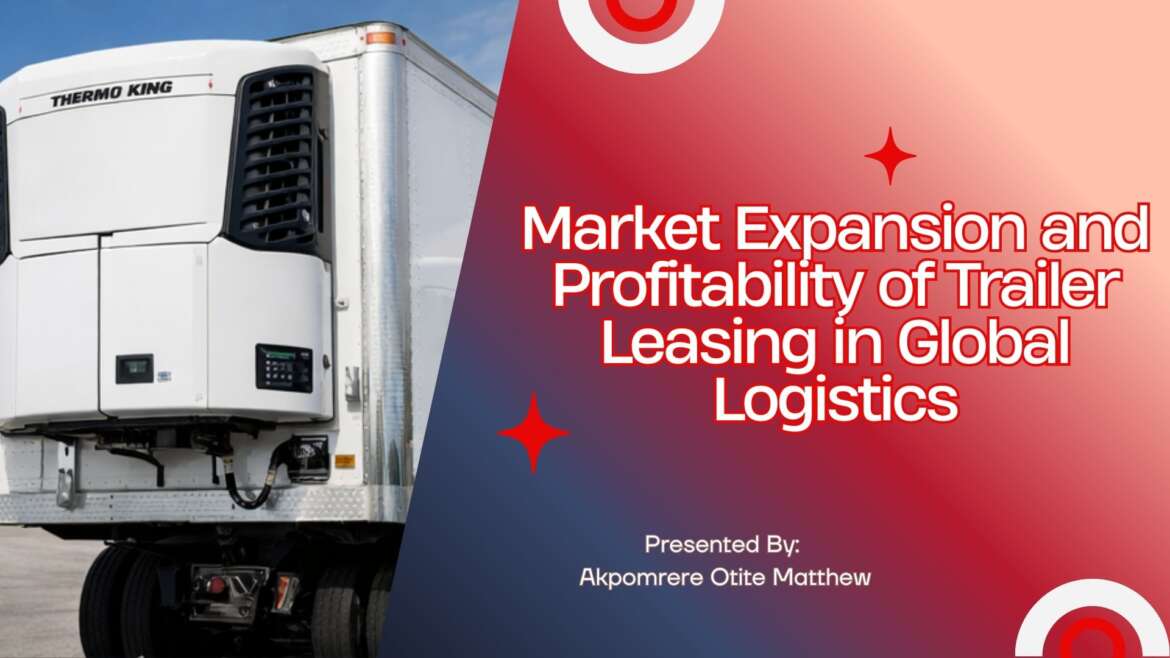
Refrigerated (Reefer) Trailers – Used for temperature-sensitive goods such as food and pharmaceuticals
By leasing trailers, companies can expand their transport capacity when needed while minimizing operational risks and maintenance costs.
Key Trends Shaping the Trailer Leasing Industry
Several major trends are driving the evolution of the global trailer leasing market.
1. Rising Demand for Transportation Capacity
The growth of online retail and global supply chains has dramatically increased the demand for freight movement.
During peak seasons, logistics companies often require additional equipment. Leasing trailers provides a fast and flexible solution to meet this temporary demand.
2. Focus on Cost Efficiency
Purchasing trailers requires significant upfront capital investment.
Leasing eliminates these high initial costs and allows businesses to:
- Preserve working capital
- Reduce financial risk
- Allocate funds to other operational needs
For many logistics operators, leasing has become a more financially strategic option.
3. Sustainability and Environmental Compliance
Environmental regulations are becoming stricter worldwide. Companies are increasingly adopting fuel-efficient and environmentally friendly trailers.
Through leasing, businesses can access modern equipment with improved emissions standards without frequently replacing their fleets.
4. Technology Integration
Modern trailers are increasingly equipped with advanced technologies such as:
- IoT sensors
- GPS tracking systems
- Telematics monitoring
These technologies allow companies to:
- Track cargo in real time
- Monitor trailer conditions
- Optimize routing and delivery performance
Leasing providers often upgrade fleets regularly, giving logistics companies access to cutting-edge transportation technology.
What Is Driving the Expansion of the Trailer Leasing Market?
Several global factors are accelerating growth in the trailer leasing sector.
Growth of E-Commerce
Online shopping has transformed logistics worldwide.
E-commerce businesses require fast, reliable, and scalable transportation systems to move goods from warehouses to consumers.
Trailer leasing allows logistics companies to rapidly scale operations during peak shopping periods, such as holiday seasons and major promotional events.
Globalization of Trade
International trade continues to expand as companies access new markets and supply chains.
However, entering new regions often involves uncertain demand and operational risks.
Leasing trailers enables companies to expand logistics capacity without committing to long-term equipment ownership.
Infrastructure Development
Governments around the world are investing heavily in:
- Road networks
- Freight corridors
- Seaports
- Logistics hubs
Improved infrastructure makes freight movement faster and more efficient, increasing the demand for transportation equipment like trailers.
Demand for Specialized Transportation
Certain industries require specialized transportation equipment, including:
- Pharmaceuticals
- Food and beverage
- Chemicals
- Manufacturing components
Leasing allows companies to access specialized trailers without purchasing expensive dedicated equipment.
How Trailer Leasing Generates Profit
Trailer leasing has become a highly profitable business model in the logistics sector.
Here are the major reasons why.
1. Recurring Revenue Model
Leasing companies earn income through monthly or long-term lease payments.
This predictable revenue stream allows them to:
- Forecast income
- Maintain stable cash flow
- Plan long-term fleet investments
2. Reduced Ownership Risks
When companies lease trailers, the leasing provider typically manages maintenance, compliance, and asset depreciation.
This arrangement allows logistics operators to focus on core business activities such as freight movement and customer service.
3. Flexibility and Scalability
One of the biggest advantages of leasing is operational flexibility.
Companies can:
- Increase trailer capacity during peak demand
- Reduce equipment during slow periods
- Adjust lease agreements based on business needs
This adaptability helps businesses remain profitable in volatile logistics markets.
4. Competitive Service Advantage
Access to modern trailers with advanced features—such as temperature control and telematics systems—allows logistics companies to offer higher-quality transportation services.
This improves:
Customer satisfaction
- Delivery reliability
- Business competitiveness
Challenges Facing the Trailer Leasing Industry
Despite its growth, the trailer leasing market also faces several challenges.
Market Competition
As more companies enter the leasing market, competition increases. This can lead to price reductions and smaller profit margins.
Economic Uncertainty
Economic downturns or trade disruptions can reduce freight demand, which may affect the number of trailers leased by logistics companies.
Regulatory Compliance
Different countries and regions enforce varying transportation regulations.
Leasing companies must ensure their fleets comply with:
- Safety standards
- Environmental regulations
- Cross-border transportation requirements
Managing these requirements can be costly and complex.
The Future of Trailer Leasing in Global Logistics
The future of trailer leasing in global logistics looks promising.
As global supply chains become more complex, logistics companies will continue to seek flexible and cost-effective transportation solutions.
Emerging trends expected to shape the future include:
- Smart trailers with AI-powered monitoring
- Increased demand for cold-chain logistics
- Expansion of cross-border trade routes
- Sustainable and energy-efficient trailer fleets
Companies that adopt technology, sustainability practices, and flexible leasing models will likely dominate the next phase of logistics growth.
Conclusion
Trailer leasing is becoming a critical pillar of modern logistics operations.
By offering flexibility, reducing capital expenditure, and enabling access to advanced transportation technology, leasing solutions help logistics companies remain competitive in a rapidly changing industry.
As e-commerce continues to expand and global trade networks grow, trailer leasing will play an increasingly important role in driving efficiency, profitability, and innovation in the logistics sector.
Leave a reply